The fascination with the waters of the Mar Menor began in Roman times, when the nobility took advantage of their healing properties. The thermal baths were not only a place of relaxation but also a symbol of social status.
Our Story
Los Alcázares, located in the Mar Menor region, is a municipality steeped in history and tradition. Since Roman and Arab times, thermal baths have been a central point of its development. This article will take you on a journey through time, exploring the impact of thermal waters on health, tourism, and the local economy.
The historical origin of the thermal baths in Los Alcázares
Roman empire
During the Arab period, practices of body care, such as bathing, were deeply integrated into daily life. The Arabs valued the waters of the Mar Menor for their medicinal and spiritual benefits, consolidating their use in the region.
The waters rich in salts and minerals from the Mar Menor have positive effects on the skin, nervous system, and joints. For centuries, these properties have been harnessed by both locals and visitors.
In the Middle Ages, thalassotherapy remained a common practice. It was seen as an essential treatment for nobles and clergy seeking to improve their overall well-being.
The resurgence of Los Alcázares in the 19th century
In the late 19th century, Los Alcázares became a popular destination for wealthy families. The bourgeoisie practiced the "novenario," a ritual of at least nine sea baths believed to be rejuvenating.
The economic growth of Los Alcázares between 1901 and 1903 not only strengthened its commerce but also boosted tourism development, increasing the population and attracting more visitors..
The Seaplane Base and the General Air Academy
In 1915, the first Seaplane Base of the Spanish Army was established in Los Alcázares. This marked a turning point in the history of the municipality, transforming it into a strategic location.
The Seaplane Base served as the precursor to the General Air Academy, located in the neighbouring town of San Javier, further solidifying the military significance of the region.
The La Encarnación Spa
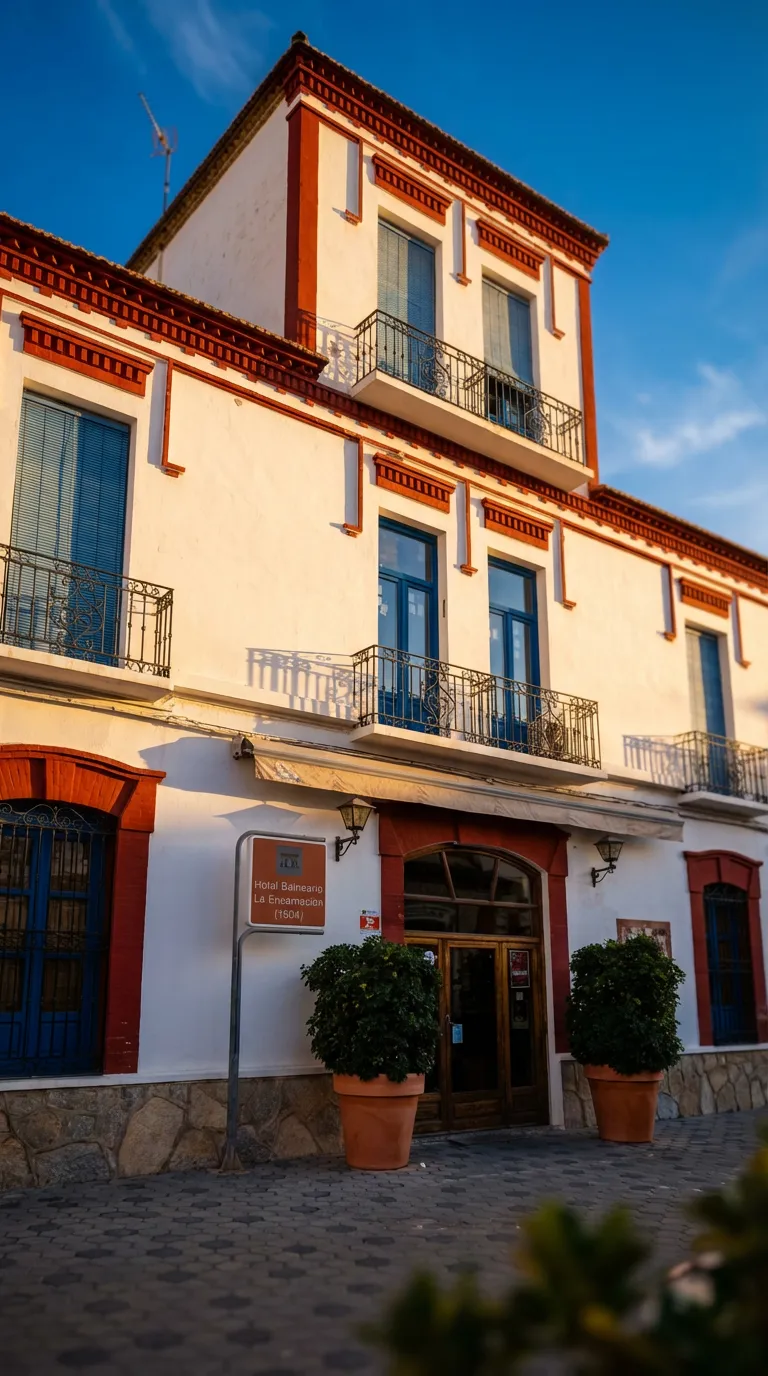
In 1904, Don Alfonso Carrión Belmonte inaugurated the La Encarnación Spa, an iconic beachfront structure. His vision propelled thermal tourism in the area.
This spa not only offered accommodation but also thermal baths that attracted visitors from all over Spain. It was also a pioneer in tourism promotion with the publication of the first advertising brochure in 1904.
Los Alcázares today
In 1915, the first Seaplane Base of the Spanish Army was established in Los Alcázares. This marked a turning point in the history of the municipality, transforming it into a strategic location.
Today, Los Alcázares remains a benchmark for thermal tourism. Its infrastructure and services attract thousands of visitors seeking health and well-being.
Frequently Asked Questions
What is thalassotherapy?
It is a treatment based on the therapeutic use of seawater and its components.
Why are the waters of the Mar Menor special?
They are rich in minerals and have beneficial properties for the skin and joints.
What is the significance of the La Encarnación Spa?
It was one of the first to promote thermal tourism in Spain and is a historical symbol of Los Alcázares.
When was the General Air Academy founded?
It emerged after the Seaplane Base, establishing itself as a key military point in the region.
What tourist activities stand out in Los Alcázares?
In addition to thermal baths, highlights include water sports, historical tours, and local cuisine.
Does it still operate as a spa?
Currently, the spa functions as a museum, which can be visited